GLP-3-RT

Categories:

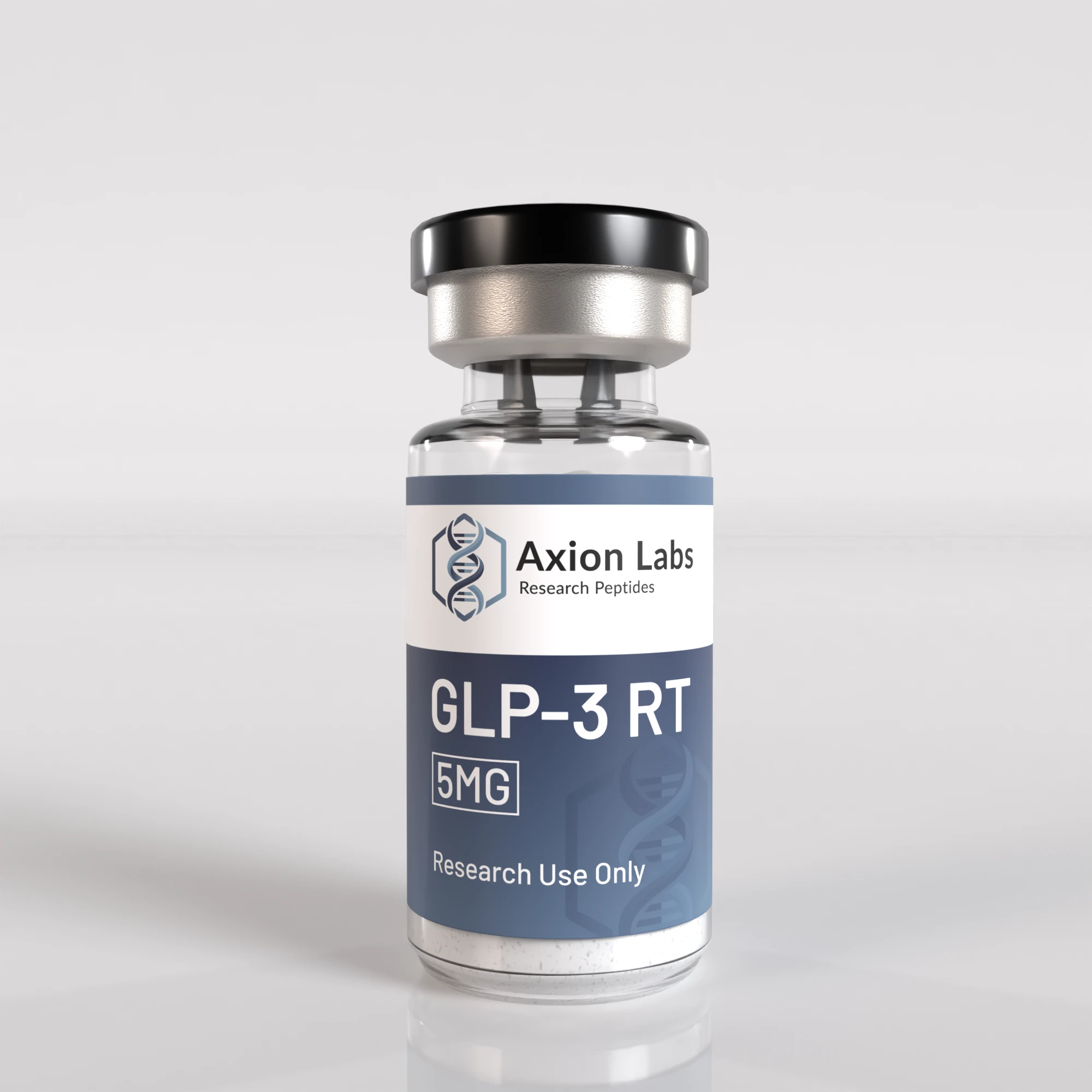
GLP-3-RT is a research-use-only peptide designed for laboratory investigations. This compound holds potential in exploring biological pathways, though no medical or therapeutic applications are intended. For research use only.

Price range: $35.00 through $185.00

Satisfaction Guaranteed

Secure
Payment

Third-party
Tested

Research Use Disclaimer

All products offered by Axion Labs are intended strictly for laboratory research and academic purposes. They are NOT for human or animal consumption, ingestion, or injection. These chemical compounds are not dietary supplements, foods, or cosmetics, and they have not been evaluated or approved by the FDA. They are not intended to diagnose, treat, cure, or prevent any disease or medical condition. By purchasing, the buyer certifies they are a qualified researcher, assumes all liability for handling, and agrees to comply with all federal and local safety regulations.


GLP-3-RT

GLP-3-RT is a synthetic peptide designed for research applications in the study of glucagon-like peptide-3 receptor (GLP-3R) signaling pathways. This compound is intended for use by qualified investigators engaged in basic or translational research related to gastrointestinal physiology, endocrine function, and metabolic regulation. GLP-3-RT is not intended for therapeutic, diagnostic, or cosmetic purposes and must be handled with strict adherence to laboratory safety protocols.

Research Context

The glucagon-like peptide-3 receptor (GLP-3R) plays a critical role in regulating gastrointestinal motility, hormone secretion, and satiety responses. GLP-3R signaling is implicated in conditions affecting gut function, such as motility disorders, inflammatory bowel disease (IBD), and metabolic disorders, including diabetes and obesity. Research involving GLP-3R agonists or antagonists has the potential to advance understanding of these pathways, although direct clinical applications remain speculative at this stage.

Research Overview

GLP-3-RT is synthesized to evaluate its binding affinity, functional activity, and specificity toward GLP-3R in vitro and in vivo models. This peptide is primarily utilized in cellular assays, recombinant expression systems, and preclinical animal studies to assess receptor-mediated effects on gut hormone release, enteric nervous system activity, and metabolic responses. Due to its potential interaction with GLP-3R, careful consideration must be given to off-target effects, particularly in systems where related receptors (e.g., GLP-1R) may exhibit cross-reactivity.

Key Research Focus Areas

  • GLP-3R Binding and Functional Assays:
    – Evaluation of peptide-receptor binding kinetics via surface plasmon resonance (SPR), ELISA, or receptor-binding assays.
  • In Vitro Pharmacology:
    – Assessment of GLP-3R-mediated signaling in transfected cell lines (e.g., HEK293, CHO) or primary enteric neurons.
  • In Vivo Models:
    – Administration in rodents (e.g., mice, rats) to study gastrointestinal motility, hormone release (e.g., GLP-3, GLP-1), and metabolic outcomes.
  • Cross-Reactivity Studies:
    – Comparison with endogenous GLP-3 or GLP-1 peptides to determine specificity and avoid confounding effects.
  • Toxicology and Safety Profiles:
    – Evaluation of acute and chronic toxicity, systemic distribution, and potential off-target effects in research settings.

Safety Considerations

GLP-3-RT must be handled with the same caution as any research peptide or small molecule. Potential risks include unintended receptor activation, immunogenicity, or pharmacokinetic interactions with endogenous signaling pathways. Investigators should follow institutional biosafety protocols, including proper storage (e.g., refrigerated or lyophilized), disposal procedures, and documentation of usage. Inhalation, ingestion, or accidental exposure to GLP-3-RT is highly prohibited.

For research use only. Not for human or animal consumption.

Lorem ipsum dolor sit amet, consectetur adipiscing elit. Ut elit tellus, luctus nec ullamcorper mattis, pulvinar dapibus leo.

At Hollywood Peptides, we provide more than just industry-leading compounds; we provide the certainty and excellence required for groundbreaking results. We recognize that in the world of science, there is no room for error. That is why every formulation we offer is subjected to stringent validation and certification protocols.
 
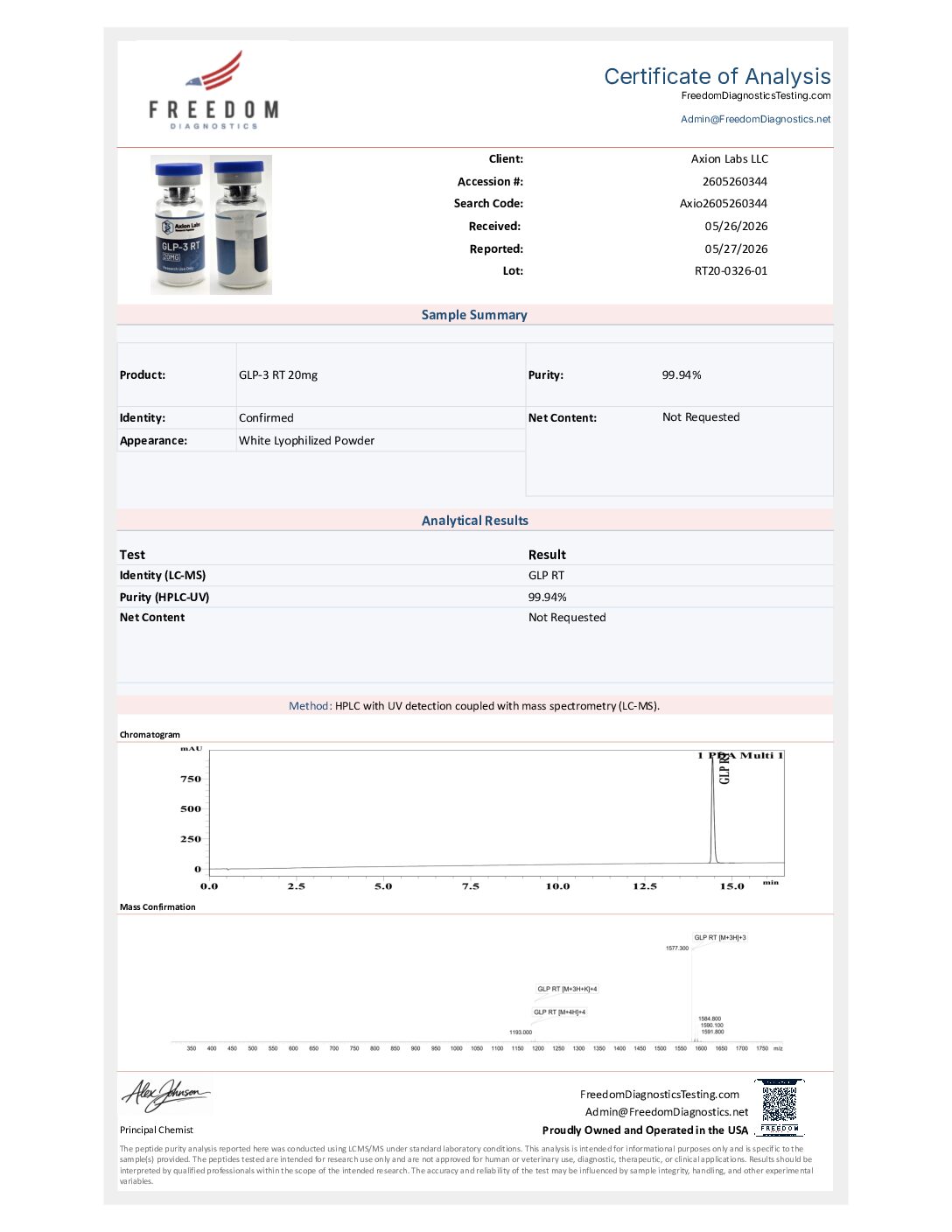
Lab Report
Date Added :
05/28/2026


GLP-3-RT

GLP-3-RT is a synthetic peptide designed for research applications in the study of glucagon-like peptide-3 receptor (GLP-3R) signaling pathways. This compound is intended for use by qualified investigators engaged in basic or translational research related to gastrointestinal physiology, endocrine function, and metabolic regulation. GLP-3-RT is not intended for therapeutic, diagnostic, or cosmetic purposes and must be handled with strict adherence to laboratory safety protocols.

Research Context

The glucagon-like peptide-3 receptor (GLP-3R) plays a critical role in regulating gastrointestinal motility, hormone secretion, and satiety responses. GLP-3R signaling is implicated in conditions affecting gut function, such as motility disorders, inflammatory bowel disease (IBD), and metabolic disorders, including diabetes and obesity. Research involving GLP-3R agonists or antagonists has the potential to advance understanding of these pathways, although direct clinical applications remain speculative at this stage.

Research Overview

GLP-3-RT is synthesized to evaluate its binding affinity, functional activity, and specificity toward GLP-3R in vitro and in vivo models. This peptide is primarily utilized in cellular assays, recombinant expression systems, and preclinical animal studies to assess receptor-mediated effects on gut hormone release, enteric nervous system activity, and metabolic responses. Due to its potential interaction with GLP-3R, careful consideration must be given to off-target effects, particularly in systems where related receptors (e.g., GLP-1R) may exhibit cross-reactivity.

Key Research Focus Areas

  • GLP-3R Binding and Functional Assays:
    – Evaluation of peptide-receptor binding kinetics via surface plasmon resonance (SPR), ELISA, or receptor-binding assays.
  • In Vitro Pharmacology:
    – Assessment of GLP-3R-mediated signaling in transfected cell lines (e.g., HEK293, CHO) or primary enteric neurons.
  • In Vivo Models:
    – Administration in rodents (e.g., mice, rats) to study gastrointestinal motility, hormone release (e.g., GLP-3, GLP-1), and metabolic outcomes.
  • Cross-Reactivity Studies:
    – Comparison with endogenous GLP-3 or GLP-1 peptides to determine specificity and avoid confounding effects.
  • Toxicology and Safety Profiles:
    – Evaluation of acute and chronic toxicity, systemic distribution, and potential off-target effects in research settings.

Safety Considerations

GLP-3-RT must be handled with the same caution as any research peptide or small molecule. Potential risks include unintended receptor activation, immunogenicity, or pharmacokinetic interactions with endogenous signaling pathways. Investigators should follow institutional biosafety protocols, including proper storage (e.g., refrigerated or lyophilized), disposal procedures, and documentation of usage. Inhalation, ingestion, or accidental exposure to GLP-3-RT is highly prohibited.

For research use only. Not for human or animal consumption.

Size

10MG, 20MG, 30MG, 5MG

Reviews

There are no reviews yet.

Be the first to review “GLP-3-RT”

Your email address will not be published. Required fields are marked *

Related Peptides

Age Verification!

*By continuing, you confirm eligibility and legal compliance.