
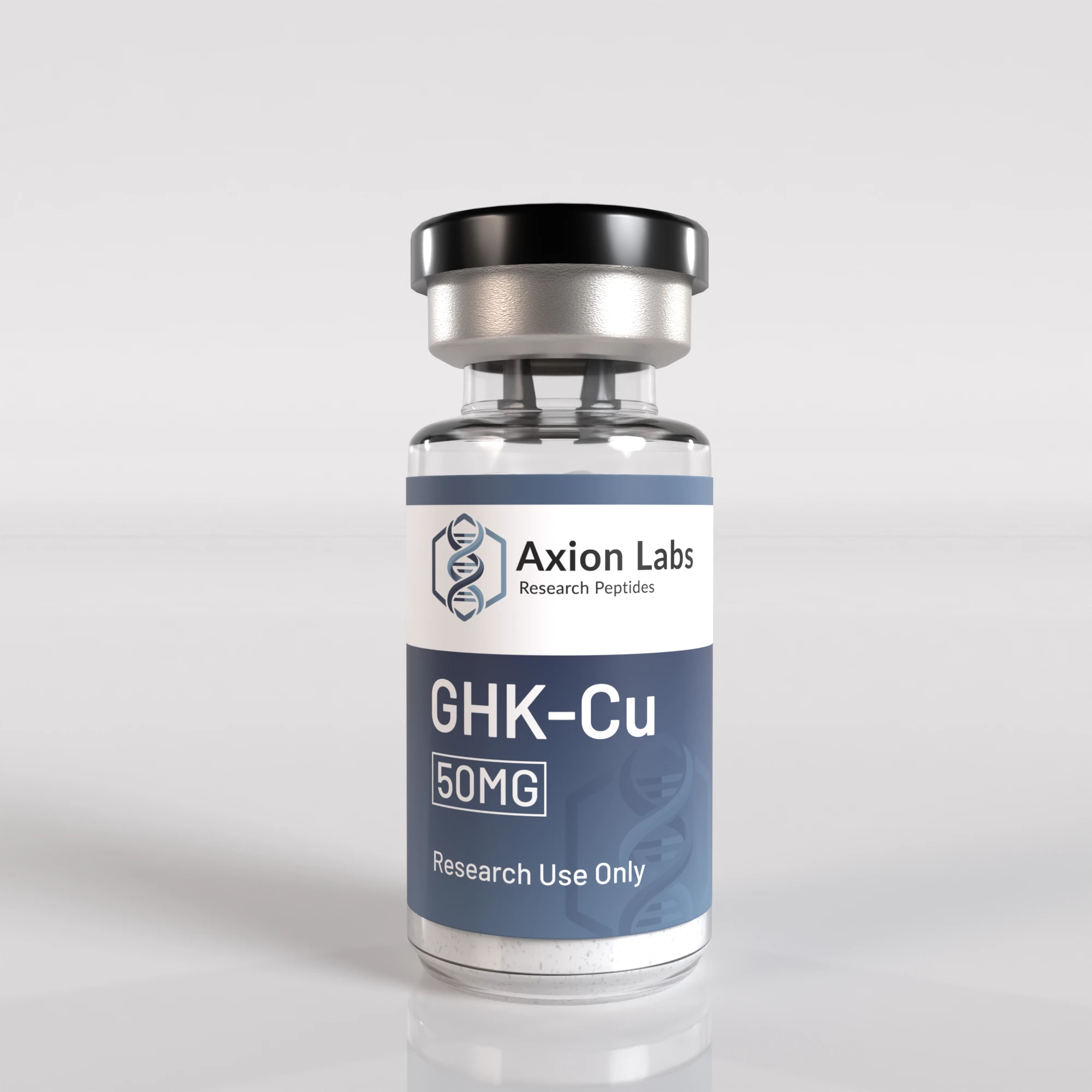

GHK-Cu: A Research-Only Peptide for Cell Signaling Studies
GHK-Cu (Glycyl-L-Histidyl-L-Lysine-Copper Complex) is a peptide-copper complex extensively studied in the research community for its potential role in wound healing, cell signaling, and tissue regeneration. As a research-use-only material, GHK-Cu is provided for academic and experimental investigations in vitro or in vivo under controlled conditions. This description outlines its chemical properties, relevant scientific applications, and safety considerations in a research context.
Research Context
GHK-Cu was first discovered in the late 1970s as a component of human plasma and has since been characterized as a naturally occurring peptide-copper complex. Its biological activity is attributed to the coordination of copper ions within the peptide backbone, enabling selective interactions with cell membranes and extracellular matrices. Over decades of research, GHK-Cu has emerged as a model compound for studying endothelial cell function, extracellular matrix remodeling, and tissue regeneration.
Research Overview
GHK-Cu has been investigated for its effects on endothelial cell migration, which is critical in processes such as wound repair and angiogenesis. Studies have demonstrated its ability to promote endothelial cell adhesion, proliferation, and barrier function, particularly in models of dermal and mucosal injury. The peptide’s mechanism of action includes modulation of matrix metalloproteinases (MMPs), enzymes that degrade extracellular matrices, thereby influencing tissue remodeling. Additionally, GHK-Cu has been explored in preclinical research for its potential neuroprotective and anti-inflammatory properties in neurodegenerative and inflammatory disease models.
Key Research Focus Areas
- Endothelial Cell Function: GHK-Cu’s role in promoting endothelial cell migration, adhesion, and barrier integrity, with implications for wound healing and vascular repair.
- Extracellular Matrix Remodeling: Regulation of matrix metalloproteinases (MMPs) and tissue remodeling during healing processes.
- Neuroprotection and Neuroinflammation: Preclinical investigations into its potential in neurodegenerative disease models, including Alzheimer’s and Parkinson’s.
- Inflammatory and Immune Responses: Modulation of inflammatory pathways in chronic inflammatory and autoimmune diseases.
- Drug Delivery Systems: Exploration of GHK-Cu as a scaffold or carrier in tissue engineering and regenerative medicine applications.
Safety and Handling Considerations
GHK-Cu is a chemically stable complex, but as with all peptides and research materials, handling requires adherence to laboratory safety protocols. Potential risks include irritation or contamination if not used in a controlled research environment. The peptide-copper complex may exhibit low toxicity in vitro but should be handled with standard laboratory precautions, including aseptic techniques for in vivo applications. Always follow institutional biosafety guidelines for peptide research.
Important Disclaimer
This product is intended solely for research purposes and is not intended for therapeutic, diagnostic, or cosmetic use in humans or animals. Research institutions and users must adhere to all applicable regulations, including but not limited to, Good Laboratory Practice (GLP) standards and country-specific research compliance laws. Unauthorized use is prohibited and may result in legal consequences. For research use only. Not for human or animal consumption.
| Size | 100MG, 50MG |
|---|
Reviews
There are no reviews yet.